
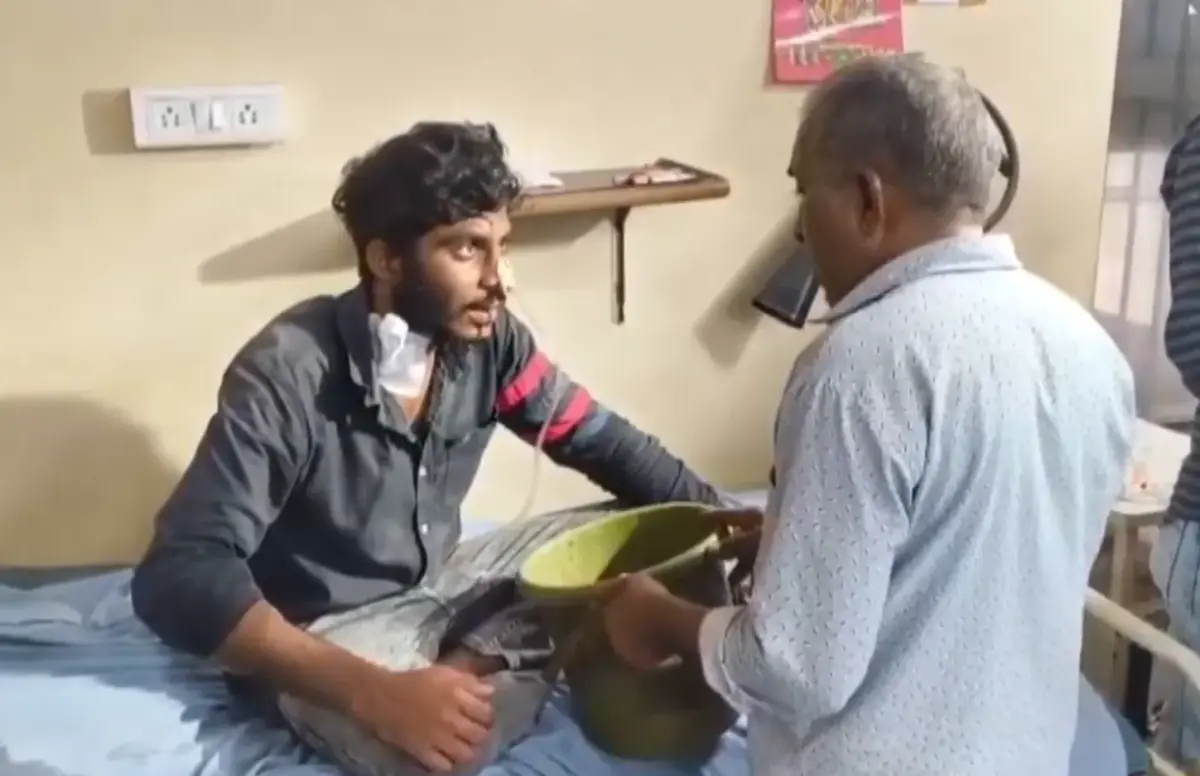

The death toll from spurious chemical-laced liquor in Bhavnagar district's Kharakadi village has risen to four, with 18 others undergoing medical treatment. Gujarat Police and district authorities have launched an extensive probe into inter-state bootlegging routes and illegal methyl alcohol diversion.
- The death toll in Bhavnagar's Kharakadi village has increased to four, with 18 individuals hospitalised.
- Investigators suspect the spurious brew was laced with diverted industrial methyl alcohol.
- Gujarat Police are tracking cross-border supply routes originating from central India.
- The tragedy has intensified calls for stricter supply-chain monitoring of industrial chemicals under prohibition laws.
Bhavnagar: The death toll in the spurious liquor tragedy in Gujarat's Bhavnagar district has risen to four following the death of another victim undergoing treatment at Sir Takhtasinhji General Hospital. At least 18 other individuals from Kharakadi village remain hospitalised, several in critical condition, after consuming illicit chemical-laced alcohol. The incident has once again placed the state's stringent prohibition enforcement mechanisms under intense public and administrative scrutiny.
Inter-State Chemical Supply Chain Under Scanner
Preliminary investigations by the Gujarat Police and local crime branch units indicate that the consignment of spurious liquor was manufactured using diverted industrial-grade methyl alcohol (methanol). Investigators suspect the illicit chemical consignment crossed state boundaries via clandestine freight routes originating in central India, deliberately bypassing standard border checkpoints and transport verification protocols.
Special investigation teams (SIT) have been deployed across border corridors to map out the distribution network, identify local bootleggers, and track the upstream suppliers responsible for sourcing the toxic chemical solvent.
Medical Response and Forensic Examination
According to the Bhavnagar District Administration, rapid medical intervention teams were dispatched to Kharakadi and surrounding hamlets to identify residents displaying symptoms of methanol poisoning, such as metabolic acidosis, visual disturbances, and severe nausea.
Forensic Science Laboratory (FSL) teams have seized samples of the seized liquid, containers, and chemical residue from the scene. Initial qualitative chemical analyses confirm high concentrations of toxic methanol, a compound frequently used as an industrial solvent that causes severe organ failure, permanent blindness, and death when ingested.
Enforcement Scrutiny and Policy Accountability
Under the Gujarat Prohibition Act, the manufacture, storage, sale, and consumption of alcoholic beverages are strictly prohibited. However, recurring tragedies involving adulterated industrial chemicals highlight critical enforcement gaps in monitoring the end-to-end supply chain of industrial solvents.
Public health experts and administrative monitors are urging authorities to establish stringent digital tracking systems—such as QR-coded consignment verification and mandatory digital logging—for wholesale methyl alcohol consignments to prevent industrial diversion into illicit domestic markets.
Frequently Asked Questions
Ketan
adminPassionate journalist and digital news editor committed to delivering accurate, timely, and fact-checked news.
Related Articles




Latest Articles

PM Modi Conferred Uzbekistan's Highest Honour 'Ord...
Aug 30, 2026
IMD East India Heavy Rain Alert: Red Warning in Od...
Aug 30, 2026
Bihar Reservation Row: Chirag & Manjhi Spar Over C...
Aug 30, 2026
Mohan Bhagwat at MSG: 'Unity in Diversity' & Messa...
Aug 30, 2026
Comments (0)
Leave a Comment
No comments yet. Be the first to comment!