
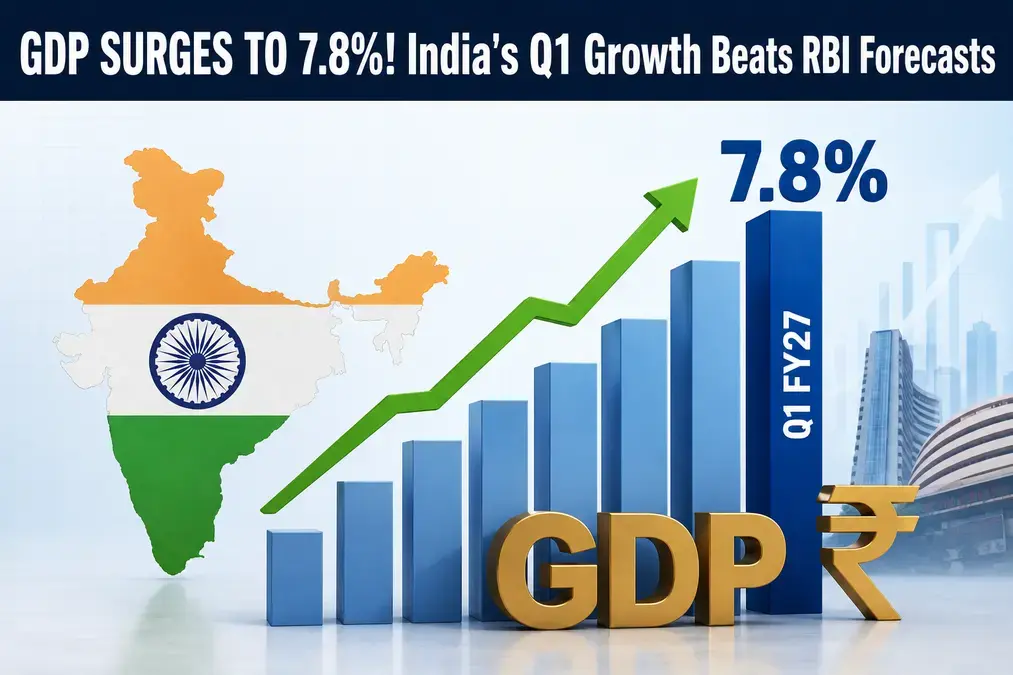

India's real GDP growth for Q1 FY27 accelerated to 7.8%, beating the RBI's 7.0% forecast, propelled by an 11.9% rebound in fixed capital formation, 9.2% manufacturing expansion, and steady services momentum.
- India's real GDP grew 7.8% in Q1 FY27, outpacing the RBI forecast of 7.0%.
- Gross Fixed Capital Formation (investments) expanded by 11.9%.
- Manufacturing surged to 9.2% while high-value services grew 12.1%.
- Nominal GDP rose 10.3% to Rs 88.27 lakh crore.
- The strong growth beat gives the RBI flexibility to keep policy rates unchanged.
New Delhi: India's real Gross Domestic Product (GDP) grew at an impressive, faster-than-expected pace of 7.8% year-on-year in the first quarter (April–June) of the financial year 2026-27 (FY27), according to official data released by the National Statistical Office (NSO) under the Ministry of Statistics and Programme Implementation (MoSPI). The headline print comfortably outpaced the Reserve Bank of India's (RBI) quarterly forecast of 7.0% and broader market projections hovering near 7.1%. For detailed coverage on fiscal indicators, industrial performance, and macroeconomic trends, explore our economy and policy desk.
Macroeconomic Snapshot: Core Figures at Constant Prices
The latest national accounts release demonstrates strong underlying economic momentum across multiple sectors:
- Real GDP: Expanded to Rs 81.36 lakh crore at constant prices, marking a 7.8% expansion compared to the 6.9% rate registered in Q1 FY26.
- Nominal GDP: Scaled up by 10.3% to Rs 88.27 lakh crore, up from Rs 80.00 lakh crore in the corresponding quarter of the previous fiscal.
- Real Gross Value Added (GVA): Registered an 8.2% expansion, supported by balanced growth in core industrial output and commercial services.
Sectoral Breakdown: Services and Industry Lead the Pack
Sector-wise GVA data confirms that domestic supply chains and value addition remained robust throughout the quarter:
- Tertiary (Services) Sector (10.0% Growth): Continued as the primary growth engine, led by Financial, Real Estate, IT, and Professional Services at 12.1%, followed by Trade, Hotels, Transport, and Communication at 8.5%.
- Secondary (Manufacturing & Utilities) Sector (8.6% Growth): Manufacturing recorded a robust 9.2% jump (up from 8.3% last year). Electricity, Gas, Water Supply & Utility services rebounded to 8.9% (recovering from a 1.8% contraction in Q1 FY26), while Construction posted solid 7.7% growth.
- Primary Sector (2.9% Growth): Agriculture, Forestry, and Fishing expanded by 3.6%, though Mining & Quarrying contracted by 2.4% on input volatility and fuel-mineral extraction slowdowns.
Expenditure-Side Dynamics: Capex & Investment Rebound
The expenditure components were headlined by a sharp revival in capital investments:
- Gross Fixed Capital Formation (GFCF): Rebounded with a massive 11.9% double-digit growth, more than doubling the 5.8% rate in Q1 FY26, driven by aggressive central capital outlay and private capacity expansion.
- Private Consumption (PFCE): Rose 7.1%, proving that private consumption across urban and rural segments remained steady.
- External Trade: Real exports expanded by 12.0%, while real imports contracted marginally by 1.1%.
Macroeconomic Resilience & RBI Policy Outlook
India’s 7.8% GDP print underscores structural resilience against geopolitical fragmentation, shipping disruptions, and elevated input costs. With growth beating baseline targets, the Reserve Bank of India (RBI) gains adequate policy room to hold key benchmark interest rates steady, enabling policymakers to focus squarely on headline inflation management without an immediate requirement for monetary easing.
Frequently Asked Questions
Ketan
adminPassionate journalist and digital news editor committed to delivering accurate, timely, and fact-checked news.
Related Articles



Latest Articles
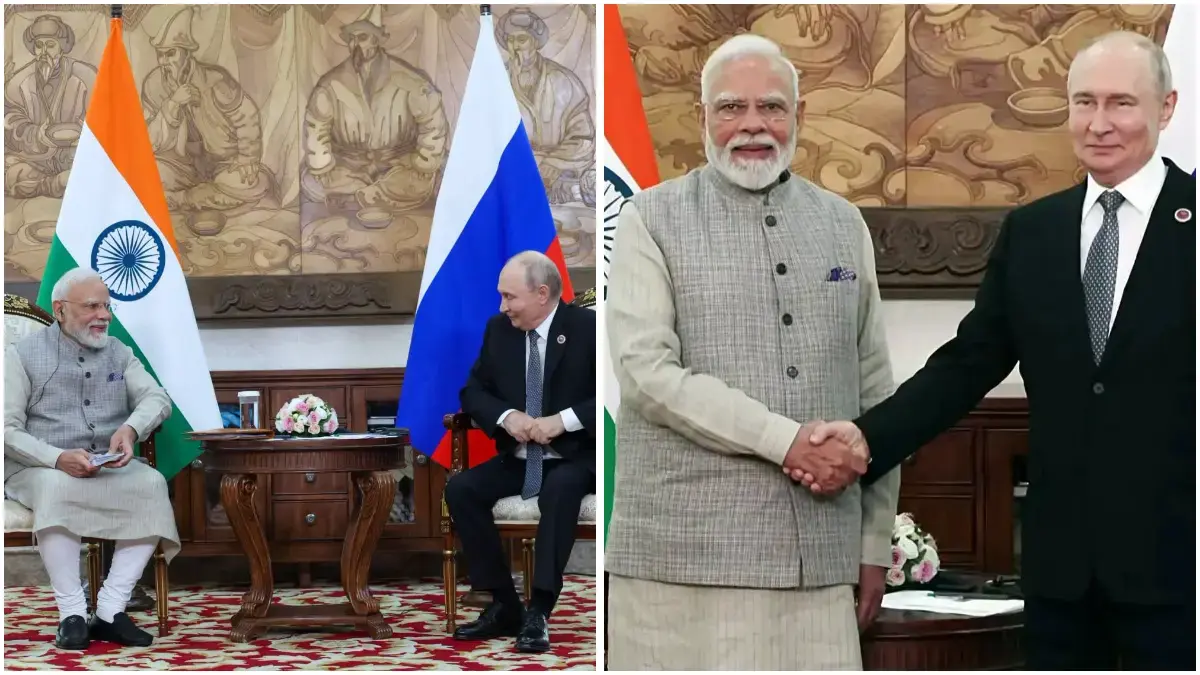
PM Modi Meets Putin and Pezeshkian at Bishkek SCO...
Aug 31, 2026
Zomato Bans Analogue Dairy Dishes in Nationwide Cr...
Aug 31, 2026
Nepal Flood Death Toll Crosses 900; Over 4,200 Mis...
Aug 31, 2026
PM Modi Conferred Uzbekistan's Highest Honour 'Ord...
Aug 30, 2026
Comments (0)
Leave a Comment
No comments yet. Be the first to comment!