
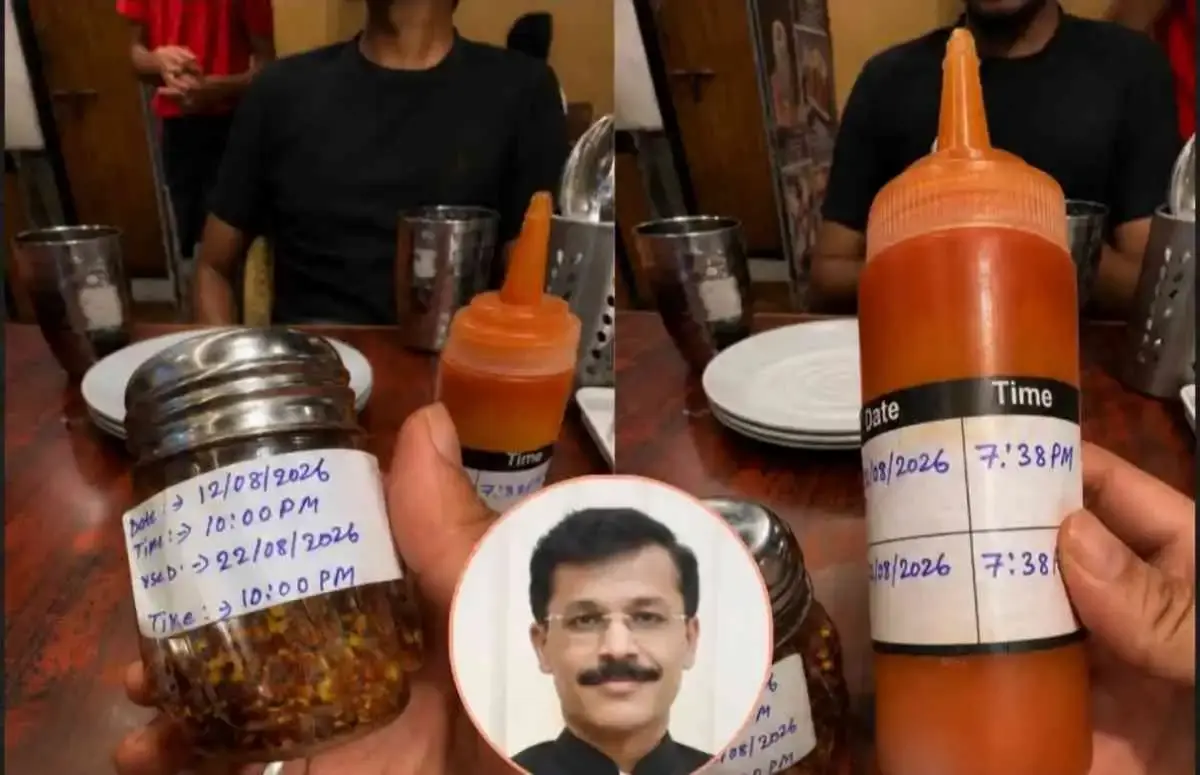

Under the leadership of FDA Commissioner Tukaram Mundhe, Maharashtra has enforced a rigorous food safety drive requiring Mumbai and Pune restaurants to label preparation and discard timestamps on loose condiments, while executing over 3,000 surprise inspections and banning loose cooking oil and newspaper packaging.
- Maharashtra FDA has mandated preparation and expiry timestamps on loose sauces, chutneys, and condiments in restaurants.
- Over 3,000 surprise audits have been conducted across commercial kitchens, dark stores, and dairy hubs.
- More than 165 food licences have been suspended/cancelled, with 764+ improvement notices issued.
- Enforcement targets loose cooking oil with high TPC levels, newspaper food packaging, and synthetic analogue paneer.
- The drive has sparked a nationwide social media call for FSSAI to deploy similar zero-tolerance enforcement across India.
Mumbai: In a regulatory transformation across Maharashtra's hospitality sector, commercial dining establishments, cloud kitchens, and street-food outlets in Mumbai and Pune have begun implementing mandatory preparation and discard timestamps on loose condiments. Driven by a rigorous compliance blitz led by the Food and Drug Administration (FDA) Maharashtra under Commissioner Tukaram Mundhe, restaurants are now affixing precise date-and-time labels on refillable ketchup dispensers, in-house mayonnaise containers, freshly ground chutneys, and bulk gravies. This operational shift directly eliminates a critical hygiene loophole: the indefinite storage and reuse of unsealed, perishable condiments vulnerable to rapid bacterial proliferation. For comprehensive coverage of public health regulations and governance reforms, explore our national civic and consumer rights desk.
Over 3,000 Surprise Audits and 165+ Licence Suspensions
Since the initiation of the zero-tolerance compliance drive, state FDA inspection teams have conducted more than 3,000 unannounced inspections spanning five-star dining facilities, quick-commerce dark stores, standalone eateries, and industrial dairy units across urban hubs. The enforcement blitz has yielded strict regulatory penalties:
- Licence Actions: Over 165 operational food licences have been suspended or cancelled due to severe sanitation violations, open drains near food prep zones, and active pest infestations.
- Compliance Notices: More than 764 statutory improvement notices were served under the Food Safety and Standards Act, 2006, requiring mandatory structural rectifications within strict timeframes.
- Condiment Traceability: Commercial food handlers must now record batch production times on all loose items, ensuring that fermented, stale, or expired sides are safely discarded rather than recirculated to unsuspecting diners.
Statewide Ban on Loose Oil, Ink Newsprint, and Analogue Paneer
Beyond condiment labeling, the FDA has executed targeted regulatory curbs against pervasive public health hazards:
- Prohibition of Loose Edible Oil: A blanket ban has been enforced on the commercial distribution and use of unbranded, loose cooking oils. Flying squads are actively monitoring Total Polar Compounds (TPC) using digital oil testers to prevent the carcinogenic reuse of repeatedly reheated frying oil beyond statutory safety limits (25% TPC).
- Eradication of Newspaper Food Contact: The administration has clamped down on roadside vendors serving fried snacks like vada pav, samosas, and bhajiyas on printed newspapers, citing the toxic bioaccumulation of lead, mineral oils, and heavy metal pigments from industrial printing ink.
- Crackdown on Synthetic 'Analogue' Paneer: Stringent inspection protocols have been instituted to penalize eateries masquerading synthetic analogue paneer—manufactured from non-dairy starches, emulsifiers, and hydrogenated vegetable oils—as pure milk dairy products.
The 'FSSAI Needs a Tukaram' Consumer Movement
The uncompromising ground-level enforcement has ignited widespread traction across social media and consumer forums. Citizens across several Indian metros have pointed out that while the Food Safety and Standards Authority of India (FSSAI) possesses robust regulatory frameworks on paper, routine enforcement across municipal jurisdictions often remains inconsistent. The growing public discourse has led to consumer advocacy groups demanding that central and state enforcement bodies adopt Maharashtra's unannounced audit methodology to guarantee standardized food hygiene across national supply chains.
Frequently Asked Questions
Ketan
adminPassionate journalist and digital news editor committed to delivering accurate, timely, and fact-checked news.
Related Articles


Latest Articles

Trump Renames Lake Ontario to 'Lake America' Amid...
Aug 28, 2026
Maharashtra Grants 1-Year Breather for Auto & Cab...
Aug 28, 2026
Raksha Bandhan 2026 Nationwide Celebrations Trains...
Aug 28, 2026
Chandra Grahan & Raksha Bandhan: Sutak Kaal Rules...
Aug 28, 2026
Comments (0)
Leave a Comment
No comments yet. Be the first to comment!